
Cruciate ligament injuries, specifically the anterior cruciate ligament (ACL) and posterior cruciate ligaments (PCL), are common injuries to the knee joint. These ligaments play an important role in knee stability and can be injured due to sudden movements, twisting, or direct trauma. Cruciate ligament injuries are common in high-impact sports and activities that involve sudden changes in direction.
Anterior Cruciate Ligament (ACL) Injury:
An ACL injury is a tear or rupture of the anterior cruciate ligament, which connects the thighbone (femur) to the shinbone (tibia). This injury can be caused by a sudden twisting of the knee while the foot is planted on the ground, a direct impact to the knee, or suddenmovements in sports such as soccer, basketball, and skiing. Symptoms may include swelling, pain, knee instability, and a «popping» sensation at the time of the injury.
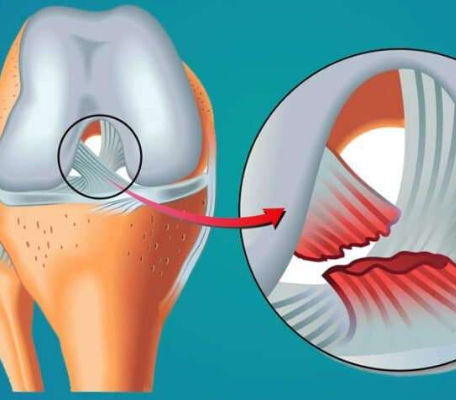
Posterior Cruciate Ligament (PCL) Injury:
PCL injuries are less common than ACL injuries. The PCL connects the tibia to the femur at the back of the knee. It can be injured due to direct trauma to the front of the knee, such as car accidents or falls. Symptoms may include pain in the back of the knee, instability, and difficulty walking.
Treatment for cruciate ligament injuries may vary depending on the severity of the injury and the patient’s activity level.
It may include:
Physical Therapy: Strengthening and stability exercises to help regain knee strength and function.
Immobilization: In some cases, a splint or brace may be recommended to stabilize the knee.
Surgery: In most cases, and for knees with severe instability, especially involving the ACL, reconstructive surgery is absolutely necessary, using tissue grafts to restore knee stability.