
Fractures are breaks in the bone tissue. They can occur due to various types of injuries or traumas. Fractures can vary in severity and can affect different parts of the body.
Some common types of fractures include:
Closed fracture: The bone is broken, but does not break through the skin.
Open fracture: The bone is broken and breaks through the skin, increasing the risk of infection.
Complete fracture: The bone breaks into two or more separate fragments.
Incomplete fracture: The bone is cracked but does not break into separate fragments.
Displaced fracture: The broken bone fragments are out of their normal alignment.
Non-displaced fracture: The broken bone fragments are in their normal alignment.
Stress fracture: Small cracks in the bone due to repetitive stress.
Pathological fracture: The bone breaks due to a disease that weakens bones, such as osteoporosis or cancer.
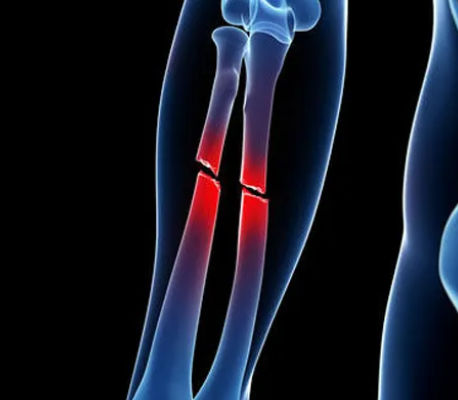
Fracture treatment depends on the severity and type of fracture. It may include immobilization with a cast, splints, or braces, closed reduction (repositioning the fragmentswithout surgery), surgery to fix the fragments with plates, screws, or pins, and rehabilitation to regain strength and function after healing.
If you suspect a fracture, it is essential to seek immediate medical attention. An accurate
diagnosis and appropriate treatment are critical for a successful recovery and to prevent long-term complications.